Showing posts with label internet. Show all posts

Friday, November 21, 2008

Social Web

Social networking websites are becoming more and more popular, and it's number is growing. Some websites provide a unique service, while other websites seem to be more of the same.
Some of your friends join one website while others join another, and both of them are requesting to join them on their website of choice.

After a while you have an account with several of those websites, and you start to notice you are providing the same information over and over again, on every of those websites : personal details, interests, schools you attended, employers you worked for.
And you have to (re)connect to your friends on every of those websites.
Not to mention when something changes, for instance when you change jobs, you have to change it on every website and hope you don't forget any of them.

Wouldn't it be convenient if all of the information you provide on those websites, can be shared between those websites? If you want to change something, you can do it in one place and all other social networking websites where you have an account adopt these changes automatically? If you add a friend on one website, and that friend has an account on another website where you have an account too, that this friend is added there as well?

I'm not the only one asking the same questions. And it seems some effort is put into creating a Social Web, where this kind of (personal) data can be shared between (social networking) websites in a open, easy and secure way.
These are a few of the initiatives :

A recent presentation (June 2008) was held with an overview of these efforts and what the future will bring. Unfortunately, these efforts, for now, are quite theoretical and about creating standards based upon existing web standards. Several protocols are proposed (FOAF, XFN, hCard, GRDDL, RDF, OpenID, OAuth, REST, ...) to be used in this new standards.

No real usable application is available at the moment, not as far as I know, but the big players (MySpace, Facebook, Google, Twitter, Netlog, ...) are backing some of these initiatives.

Thursday, September 06, 2007

Search your feeds in Google Reader

A long awaited search function is added to Google Reader.

Now you can search newsfeeds you previously read. If you know you read a newsitem about something, but can't remember on which feed it appeared, just search for it in Google Reader and the post will turn up.

Saturday, August 18, 2007

Google Gears


Some time ago (31st of May 2007), Google Gears was launched. Yet another new project, next to all the other applications Google has launched already.
But this one is different. It's not a stand-alone application, like Gmail or Google Analytics, but a framework that makes it possible to store a website or a web application offline, so you can still visit this website or use this web application while you are not connected to internet.

To show what the framework does, a new feature was implemented for Google Reader, an online news feed (RSS/Atom) reader, that makes it possible to read newsfeeds while offline. This feature uses the Google Gears framework.

I've used it for a while now, and I must say that it works well. When I'm traveling by train for example, I switch to offline mode in Google Reader, before I leave home.
When going to offline mode, Google Reader downloads 2000 messages and stores them locally. On the train, I open Google Reader in my browser and start reading the news messages, just like I would when connected to the internet.
When I get back home and switch back to online mode, Google Reader synchronises with the online version. All messages I read offline, are marked as read and the starred or shared messages are set.

I'm wondering which Google applications will be next to have an offline mode, using the Google Gears technology. An offline version of Google Calendar would be nice. ;-)

Monday, August 06, 2007

Google 3.0 : The future of internet searching

In the future, search engine Google will look like a combination of Google and Wikipedia. When you search for something on Google, you will get a wikipedia-like explanation of the term you are looking up and a list of categories to further refine your search, rather than a list of most relevant links, as you get now.
The links won't disappear completely, you will still be able to visit relevant web pages, but the links to these sites are highlighted words in the explaining text or in the biography, or 'See also' section, at the end of the small article.

The content for the small article and the categories isn't provided and edited by a community of people sharing knowledge, but is derived from all information that is accessible, like webpages and digital libraries. For this to work, an algorithm (computer program) is needed that can scan documents, articles, blogposts and webpages and understand what it is about. Some people call this AI, or Artificial Intelligence, others would define this to be base of the semantic web.
Rather than looking for the occurance of search terms in the indexes of all webpages, the search sites of the future would understand what the search is about and answer what it 'remembers' about it, after 'reading' and 'understanding' all available sources on the internet.

I'm not affiliated with Google or any other company offering internet search services. What I described is my vision on the future of websearching and looking for information. My vision is much like, and is probably influenced by, the view of Tim Berners-Lee, one of the founders of the internet, on web 3.0 and the semantic web :

I have a dream for the Web [in which computers] become capable of analyzing all the data on the Web – the content, links, and transactions between people and computers. A ‘Semantic Web’, which should make this possible, has yet to emerge, but when it does, the day-to-day mechanisms of trade, bureaucracy and our daily lives will be handled by machines talking to machines. The ‘intelligent agents’ people have touted for ages will finally materialize.
(Berners-Lee, Tim; Fischetti, Mark (1999). Weaving the Web. HarperSanFrancisco, chapter 12. ISBN 9780062515872)

The ability of computers to understand texts, rather than searching for occurances of words, is until now not possible. A big goal in computing was set out by Alan Turing, famous mathematician and the person who cracked the Enigma-code of the German army during the second World War.
The Turing Test defines that a computer must be able to have a conversation with a human, where the human is unable to tell wether he or she is talking to a computer or another person. A computer that passes the Turing Test is considered to be thinking, interpreting and understanding on its own.

When computers (or algorithms) could pass the Turing Test, they would be able to understand and interpret every available text and information and connecting it to other texts or concepts, just like humans would do, thus making the semantic web possible.
Until now, computers haven't passed the Turing Test, so we have to do with the current search technologies aided by human understanding, like I mentioned in Computers need help or projects like ChaCha.

Friday, July 27, 2007

Saving energy searching with Black Google

When displaying a screen with a white background a monitor consumes more energy than showing a black background. That's true at least for (older) CRT type of computer monitors. A study points out that a CRT monitor uses 75 Watts displaying a white background, but only consumes 59 Watts when showing an all black background.
This is not true for LCD type of monitors, as the background lighting is always on, even if some or all parts of the screen are black. But LCD monitors are far more energy efficient than CRT-monitors.

Using a site like Blackle, a version of popular Google search engine with a black background, could globaly save 750 Megawatts per year.

Tuesday, July 17, 2007

Astronomers need help

Some time ago I wrote about computers needing human assistance for certain tasks, like recognizing images or understanding text.
This time astronomers need human intelligence to assign pictures of distant galaxies to a few categories. This is another task, that's trivial for human but immensely complex and error prone for computers.
The project is called Galaxy Zoo and its concept is simple :
A picture of a galaxy is shown to you and you have to decide which category it belongs to.
This is how you get started : After registration, you get a small tutorial explaining the different types of galaxies. After the tutorial you have to do a small test where you get 15 pictures of galaxies and you have to decide which category they belong to. When you get 8 out of 15 correct, you can start sorting new galaxies.

Cut off

I haven't figured out what caused the outage, but I was cut off from internet the entire evening. Maybe the intensive rain flooded a local hub?
As the internet connection uses the television cable, I wasn't able to watch television either.

At first I was a little annoyed, but this soon faded when I realized I could read instead of watching television or spending some time on the internet.
I was able to finish a book I started reading on the train traveling to Barcelona and read some articles I had lying around.
It turned out to be a very enjoyable evening, listening to music and hearing the sound of extensive showers in the background while reading a good book.

BTW : The book I finished was 'Het derde huwelijk' (The third marriage) by Tom Lanoye.

Saturday, June 02, 2007

The big donor show

Last night, Dutch television station BNN broadcasted a game show called 'De grote donorshow' (The big donor show). 'Lisa', a terminally ill woman with a brain tumor, who turned out be an actress, was to donate a kidney to one of three contestants during a 80 minute TV-show. She had to choose who was going to get her kidney after talking to them and their families.
At the conclusion of the show, when Lisa had to choose, the moderator revealed that the show was a hoax. The ill woman was in fact a healthy actress. The contestants were really waiting for a kidney to be donated, but they were informed that the show wasn't real.

The makers of the show didn't plan to do an actual donor contest. The goal of the hoax was to draw attention to the lack of organ donors in The Netherlands. Five years ago, BNN founder Bart de Graaff died, because no suitable kidney donor could be found to help him.

The show drew a lot of attention in The Netherlands and abroad. Both CNN and BBC reported about the fake donor show. It seems the producers of the show reached their goal.

Thursday, May 31, 2007

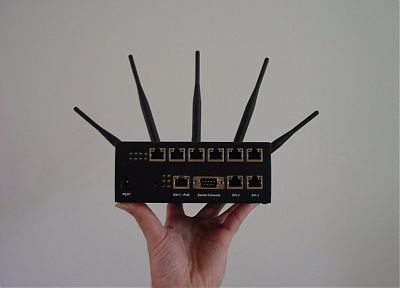
Slurpr

Last week I came along a device, called Slurpr, on the blog of Geektechnique. The creators called it 'the ultimate wardrive box'.
It is designed to access up to six wireless networks, in order to accumulate the bandwith of the wifi's it is connected to and get a massive total available bandwith.
Although wardriving and accessing other people's private wifi's is actually forbidden, this is still a very cool gadget.

It seems other people on the internet have noticed this device too, as this webcomic already mentions the Slurpr.

Monday, May 21, 2007

Fair(y) Use

This film explains what copyright is, using parts from Disney pictures. It is quite neatly done.
Now let's hope this film could be considered a parody, otherwise it's not fair use of copyrighted material and thus illegal. ;-)

Saturday, May 05, 2007

md5-hash of strings are not the same with different charactersets

I maintain a website which hosts a forum, using popular forum software. This forum stores an md5-hash of the passwords of the users of this forum in a database. This website also has an admin section which is protected by a password. The passwords of the forum database are used to get access to the admin section. To do this the md5-hash of the submitted password is compared with the md5-hash stored in the database, exactly the same way as it is done by the forum software.

This week one of the users of the website reported to me that he was unable to access the admin section, but was still able to log in to the forum. The mechanism to check the password is identical for the admin section and the forum (as described in the previous paragraph), so at first I didn't understand why he couldn't access the admin section of the website. After some debugging I found out that the md5() function produced a different hash of the same password. It produced a correct hash, which was identical to the hash stored in the database, on the forum, but a different hash came up on the admin section.

I then remembered that the webserver (Apache 1.3) was upgraded a week earlier. The new webserver (Apache 2.0) uses a different default characterset (UTF-8), causing the website to work perfectly, but some special characters were replaced with question marks. This problem was solved by changing the characterset, in a .htaccess file in the directory of the forum, as the problem only occured there :

In .htaccess I added:

AddDefaultCharset ISO-8859-1

Only the forum used the old characterset, while the rest of the website, including the admin section, used the new default characterset of the webserver. Everything seemed to work fine.

Until this week, when that user couldn't access the admin section, while some other users still could login to the admin section. After some investigation I found out that the user that couldn't login used some special characters in his password. Then I started to realise that the md5() function must produce a different hash of the same string when it is encoded in a different characterset.
This makes perfect sense. In a lot of charactersets, normal alphanumeric characters (a-z, A-Z, 0-9) are in the same place, but some special characters like é or @, can have a different place in another characterset. When a string encoded in different charactersets contains special characters, it has a different value (on a binary/hexadecimal level). Thus when a hash is calculated of these strings, different hashes are produced.

Now that I understood what was happening I solved the problem by applying the same characterset to the entire website. The user who reported the problem was again able to login to the admin section.

Thursday, April 26, 2007

Friends blogging

Last week some of my friends started a blog. They all blame peer-pressure to start a blog of their own.

Funny thing is, the style of their blogs resembles very much how I know them.

Tuesday, April 17, 2007

Nearly 25% uses Firefox in Europa

According to a survey of French webmonitor XiTi, nearly 25% of all visits to websites in Europe is done with Firefox.
For Belgium, it is 18,7%, a little less than the European average. But this is still an increase of +1,4 (+8%) compared to last year's figures.

Sunday, April 01, 2007

Google's April Fool : TiSP

Today I read a story on Slashdot about Google launching a free wireless broadband service, called TiSP. A link of how it works was provided, leading to a page on Google's website.

TiSP installation kitOn this page was a picture of an installation kit and instructions on how to get your wireless network to work. Going short : You have to flush a cable through the toilet, into the sewage system and connect one end to a wireless accesspoint. The other end is picked up by a Google engineer, located somewhere in the sewage system, connecting it to a large and fast fiber optics network.

It sounds all very promissing and it is presented very professionaly, so it seems almost believable, but it is somewhat unrealistic and inpractical to flush a cable to get wireless internet access. Combine this with the date the story was released (april, 1st) :
This must be Google's April Fool's day joke. Very funny!

Friday, March 30, 2007

Am I a nerd?

I came along a funny little quiz on Bruce's blog.

Your Result: Science/Math Nerd
 

(Absolute Insane Laughter as you pour toxic chemicals into a foaming tub of death!)

Well, maybe you aren't this extreme, but you're in league with the crazy scientists/mathmeticians of today. Very few people have the talent of math and science is something takes a lot of brains as well. Thank whosever God you worship, or don't worship, so thank no deity whatsoever in your case, for you people! Most of us would have died off without your help.

Literature Nerd
 
Gamer/Computer Nerd
 
Social Nerd
 
Anime Nerd
 
Drama Nerd
 
Artistic Nerd
 
Musician
 
What Be Your Nerd Type?

Sunday, March 18, 2007

Computers need help

Computers are good at calculating, searching through data and doing other automated tasks. And they're fast doing so. They're much faster than any human doing these tasks.
That's why computers are used for assisting human beings performing certain tasks or, in some cases even replace the human being.

But don't despair. There are some tasks a computer can't do. And that's when a human being is needed to help the computer.
A computer can't easily recognise objects shown in a picture, something a human being does without any problems or hesitation. If you show a picture of 'a car by a lake on a sunny day' to a human, he or she will tell you it's a picture of a car with a lake in the background. It seems to be nice that day, because of the blue sky and the small clouds.
If you present the same picture to a computer, depending on the complexity of the algorithm being used, you well get an answer like : large blue surface with green and red area's, or maybe (if it's a very strong or specialised algorithm) red car on blue background. The algorithm probably won't be able to tell the difference between the blue of the sky and the blue of the lake.
The same is true for recognising text. A human viewer will recognise a word or some characters without difficulty, even if the characters are deformed, written through and over each other or when the colour of the letters and the background change. Computers can detect characters and words, but only if it knows the used font, if the contrast between the characters and the background is big enough (and constant) and if the characters are nicely aligned. And even then it makes mistakes. When the conditions are a bit less ideal, a computer has a very hard time recognising characters or words. Most likely it will fail to recognise anything at all.
That's the reason why so called CAPTCHA's are used to make sure a human is performing a task on a website, like registering on a forum, leaving a message on a blog or logging into a bank-account : a computer can't read the word in the image.
This way, automated algorithms that are used to flood forums with spam, are stopped (or delayed, as the algorithms to read captcha's are getting better).

But most of the time, computers (algorithms) are unable to recognise things a human does without effort. And that's were the human can help the computer. Computers are good at looking up information that's stored in a database. So if a database would be constructed linking the picture of the car with some keywords like 'car, blye sky, sunny day, lake, ...' the computer would 'know' what is on the picture. If the computer was asked to present a picture of a 'car' or even of 'car by a lake' it would filter through the database and come up with the picture of 'the car by the lake on a sunny day'.
A computer couldn't fill the database with keyword matching data, because it is unable to recognise what's on the picture, but a human could. Of course, it would be a very tedious task for a human being to look at every existing picture and tagging it with keywords. That's why a scientists came up with the idea to turn it into some sort of a game.
The concept is easy : two randomly picked people are paired and they are presented some pictures. They have to describe what's on the picture, using keywords or tags. If both people come up with the same keyword, they are granted some points and the next image is presented. The goal is to earn as much points, i.e. get as many matching keywords as possible, in a defined timeframe. The best scores are added to a highscore list.
The concept is simple, but effective. Google is using this 'game' to tag pictures found on the web, in order to return the best matching search results for images.

So, for now computers still need human assistance to perform certain tasks, like recognising characters, text, images or every day objects or understanding what a text or conversation is about. But maybe some day, computers could pass the Turing Test, and they would be able to 'recognise', 'understand' and maybe 'think' like humans do. But it seems that computing and Artificial Intelligence have a long way to go to be able to do that. Until then, computers still need help.

Sunday, January 28, 2007

Dilbert

I receive daily Dilbert comics for quite some time now. Most of the time they are very funny or even hilarious. The comic of today is one of those hilarious ones.

Friday, January 12, 2007

MIT courses available online

Famous American university MIT, Massachusetts Institute of Technology, has made its courses available on the internet for free. This is part of the OpenCourseWare program they are participating in.
MIT wants to make their knowledge available to everyone, including those who can't afford to study at a big university. A lot of courses are already available at the moment. In the future all MIT courses will be available through the program.

Sunday, December 17, 2006

Last.fm

I registered at last.fm last week.
Last.fm is a website that keeps track of the music you listen to, using plugins for the most used music players around. When you listen to your music, with your favorite music player, information about the songs you have heard, is sent to the last.fm website.
This information is used to make a profile of your listening habbits: what is your favorite artist, what kind of music do you like most, ...
This profile is then used to match you with other people who have a similar taste. You are provided with other music those people like and which you migth like too, as you have a mutual musical taste.

At least that's what the website is telling me. I have used the plugin for a few days now, but it will take a few weeks - according to their website - to build a profile.

BTW: I got the plugin working on iTunes (it keeps track of both the music I listen to on iTunes and my iPod) and on XMMS (Linux).

Thursday, November 30, 2006

Google searches based on information on different pages?

Today I was looking for occurances of my real name on the internet using the Google search engine.
At first the results weren't very surprising. I noticed some differences with previous searches, mainly the order of the different pages in the search result differed. No big deal, things change through time, even on the internet.
But I was surprised to find my blog in the search results. Nowhere on my blog have I used my real name, and it is not mentioned in my profile. And my E-mail address, which contains my real name, isn't visible on my blog either.
There are pages on the internet that link my blog and/or nickname to my real name, so now I'm wondering if the search engine of Google combines information on different pages on the internet to create a search result?
If this is the case, it makes Google even more a superior search engine.

BTW: I repeated the same search with some other search engines, but none of them related my blog with my real name.